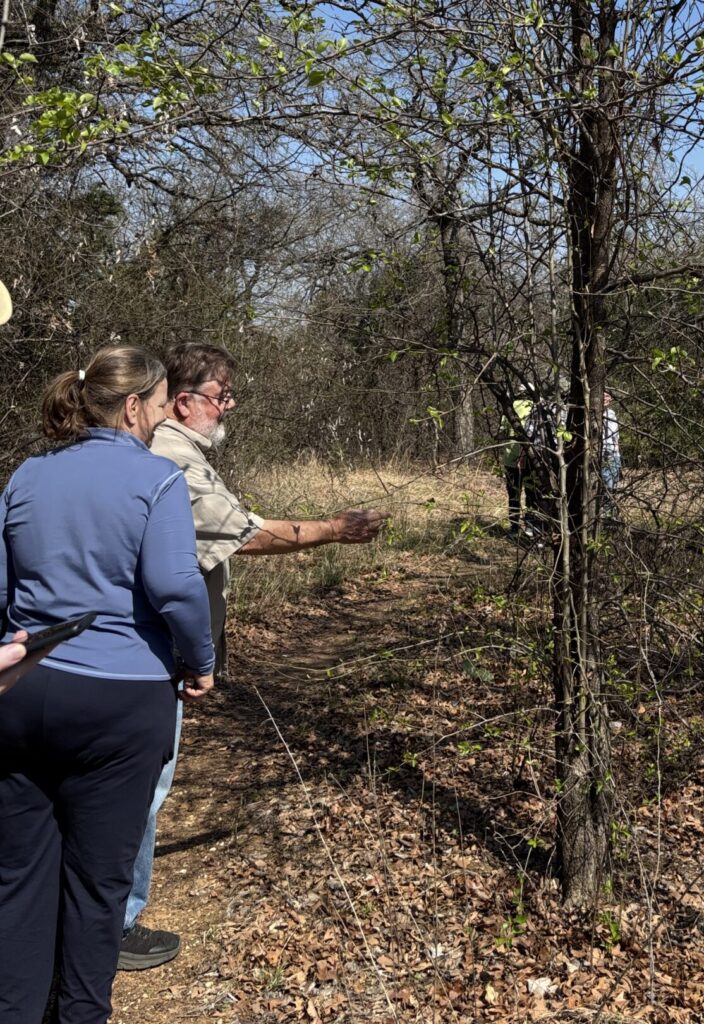
Today, February 28, from a morning low temperature of 60 degrees it warmed to 85 near the preserve, almost tying the record of 86 degrees. It was a day for noticing how the preserve is changing as the days get longer and the warm days add up. Nine folks joined Jan Miller and me for a walk that looked for signs of spring through the bare tree branches and in the brown leaf litter. It was like saying goodbye to winter.
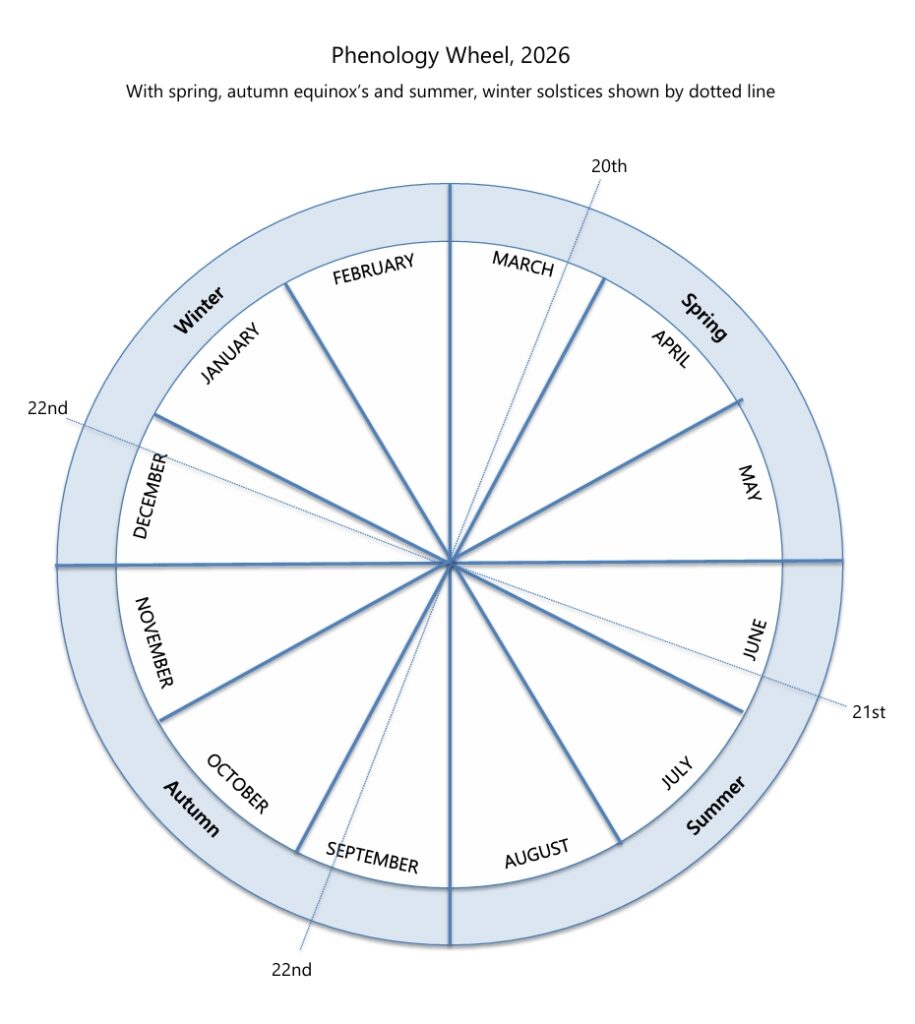
At the beginning, I talked a little about phenology, which is like understanding nature’s calendar. It is the study of cyclic or seasonal changes in living things, the timing of emergence and ending, appearance and disappearance, migration, and such things.
I put together a “phenology wheel” graphic showing seasons and months that could be used for journaling to keep track of things like the oak trees’ leafing out, then in autumn the leaves’ changing color or falling. Or perhaps the earliest frog calls heard, then the observation of tadpoles in the creek and later development of froglets. Or bird migrations, or many other things.
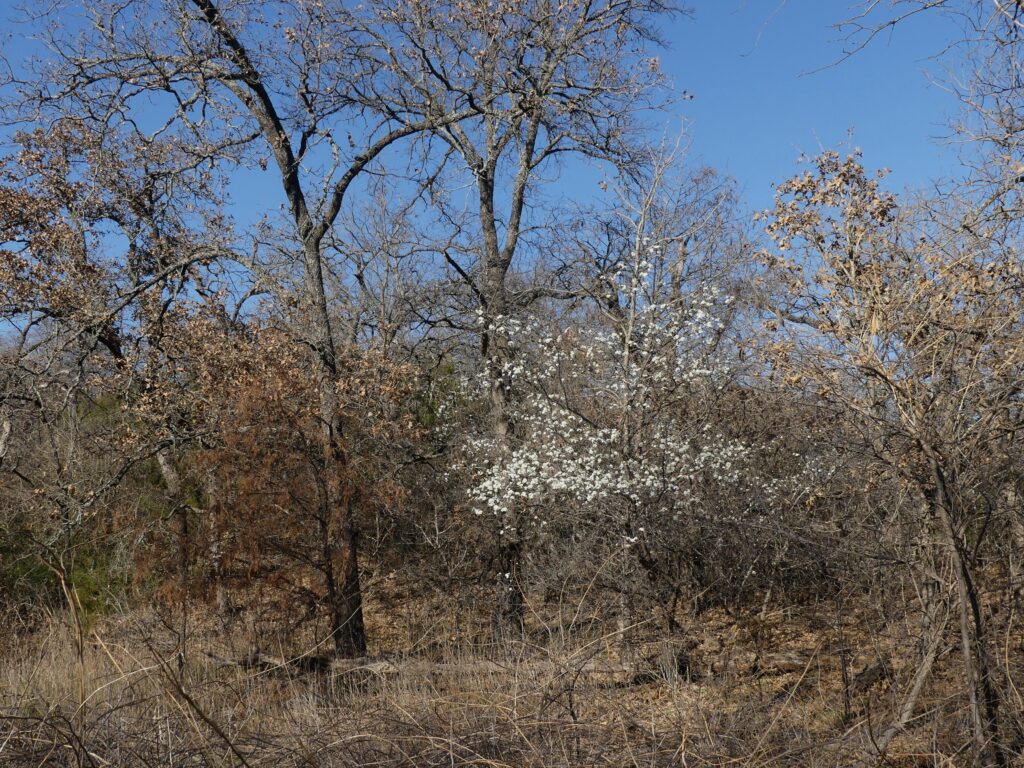
And there are many seasonal changes going on at the preserve right now. Plum trees are blooming, visible as beautiful patches of white seen through the woods. Honeybees are busy visiting these and other early flowers, and the bee tree opening is constantly busy with the bees’ arrival and departure.
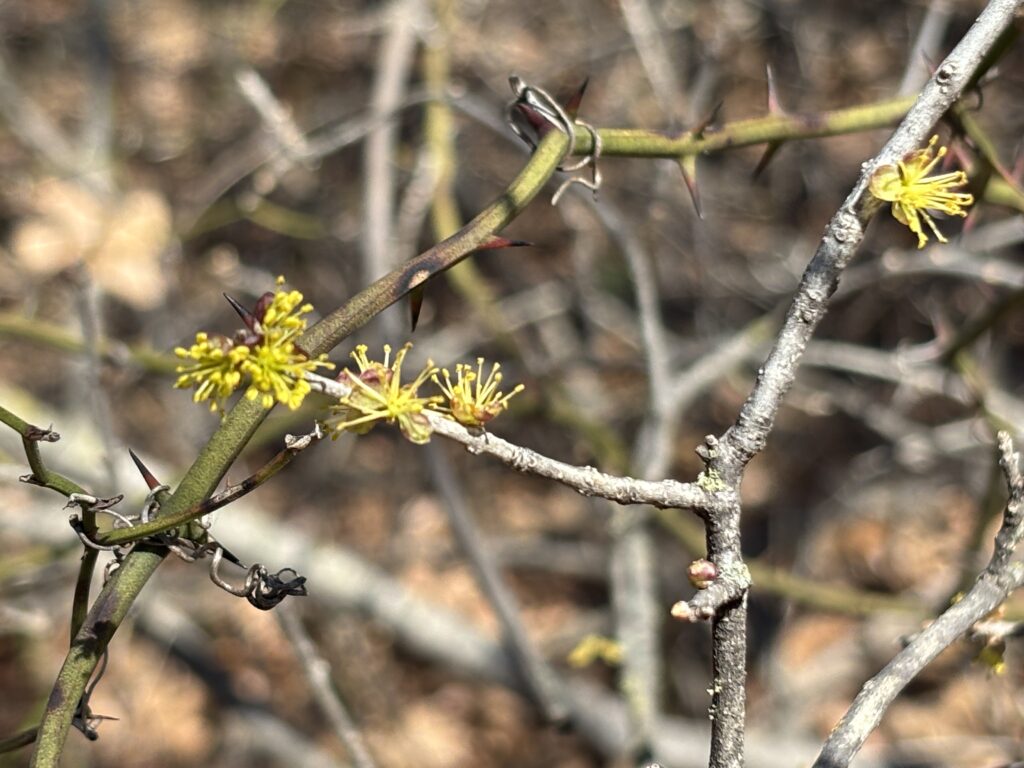
At the base of the hill there was elbow bush (or stretchberry) with their tiny greenish-yellow blooms. It’s a shrub that can form thickets with long, angular branches. Several online sources note that it is in the olive family and produces dark blue berries in summer.
We started our walk by checking out the various prairie grasses that can be seen in the “island” in the parking lot: little bluestem, a few big bluestem, switchgrass, and Indiangrass. And there are a few young oaks as well, so that that circular plot is a kind of microcosm of the surrounding Eastern Cross Timbers habitat. And the preserve itself is a kind of living museum where we can see what this area, this ecoregion, used to be when White settlers arrived. And a few of the oldest oaks in the preserve were already growing back then.
As we made our way up the hillside we heard the musical calls of northern cardinals announcing their presence, and there was the trill of a red-bellied woodpecker. Meanwhile our two species of vultures rode the currents above us.
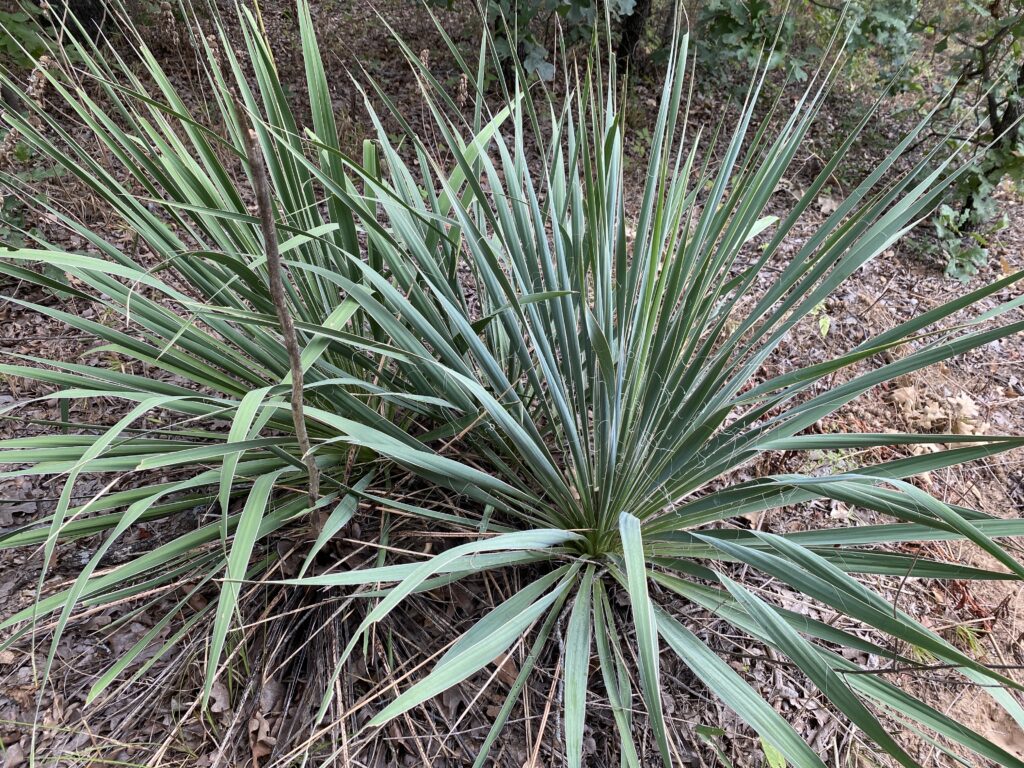
We talked about the prickly ash or “toothache tree” that is not yet leafing out, and the delightful little Texas toadflax, a flower whose name seems like something from a fairy tale. And we passed a group of Glen Rose yucca, a species of yucca found only in a few counties in north-central Texas. It particularly loves the deep sand in Sheri Capehart Nature Preserve; we can see them in many spots within the preserve.
Near the bluff, there’s a place where Nuttal’s wild indigo grows. We found a sprig that was leafing out, but later in the spring we’ll see several plants with their soft, green leaves and pale yellow flowers. Jan found a few leftover seed pods and showed them to us.
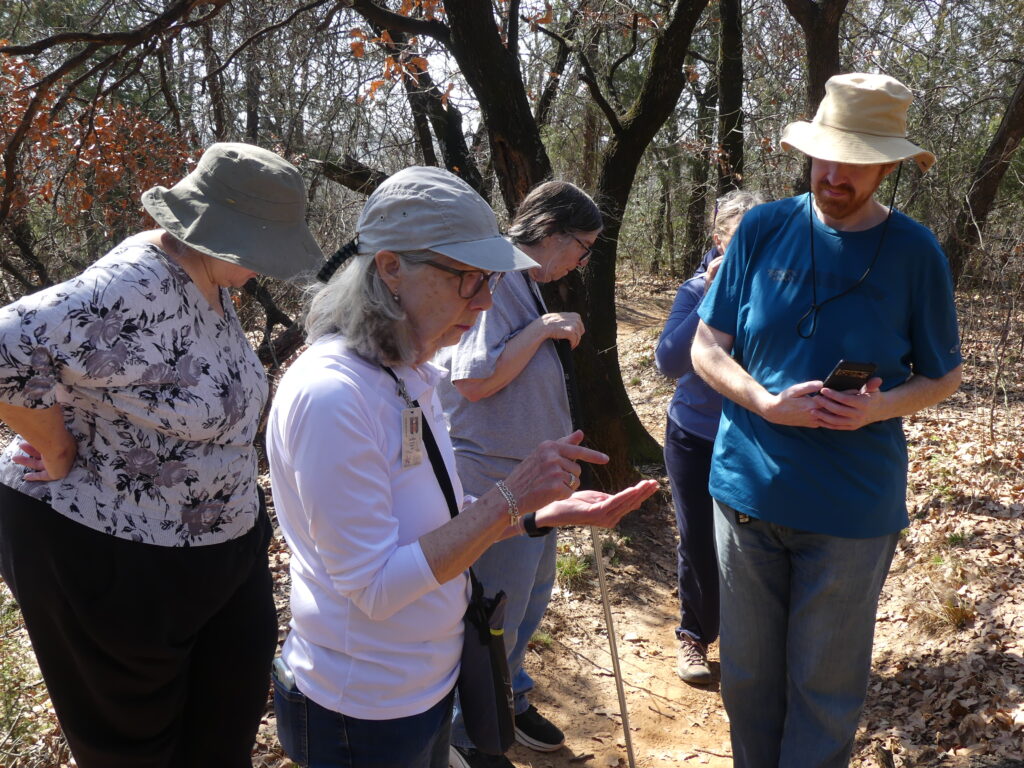
It is interesting that these walks always seem to go past their designated end point (I did talk with the group at 11:30 to ask if anyone wanted or needed to get back to the parking lot). We run a little overtime because we find so many things to talk about, and everyone seems fully on board with exploring all these things. That interest and enthusiasm is wonderful. The human history of the preserve came up a time or two, along with the biodiversity of the place – iNaturalist currently shows 2,164 species including lichens, plants, and animals that have been documented here.
This walk was a great way to say goodbye to winter. Tomorrow is the meteorological first day of spring, but the start of the season is often counted from the spring equinox on March 20th. The actual weather seems to have decided that spring is already starting. I’ll keep writing notes about what I see and keep track of the phenology of our shifting climate and all that goes with it. And all of us at Friends of Sheri Capehart Nature Preserve hope you can join us on our walks.