
March 22, 2026 – 12:15-1:57pm; Clear sky and hot sun, temperature 88F and climbing
It felt hot out in the sun, and it would climb to 95F later on, breaking the record high. More than once, the thought that occurred to me was that summer was going to take some getting used to.
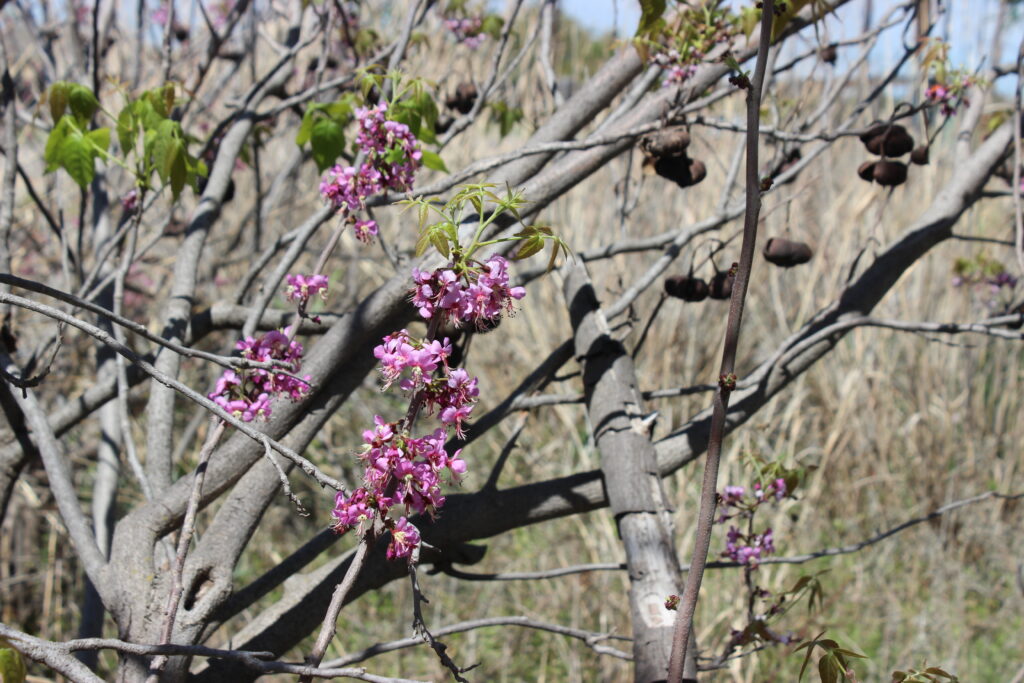
Mexican buckeye was blooming at the parking lot, putting on enough of a show to attract humans as well as bees. From a distance, looking just at the flowers, you could be forgiven for thinking it was a redbud tree. But the shape didn’t seem right, and there were last year’s big, three-lobed seed pods.
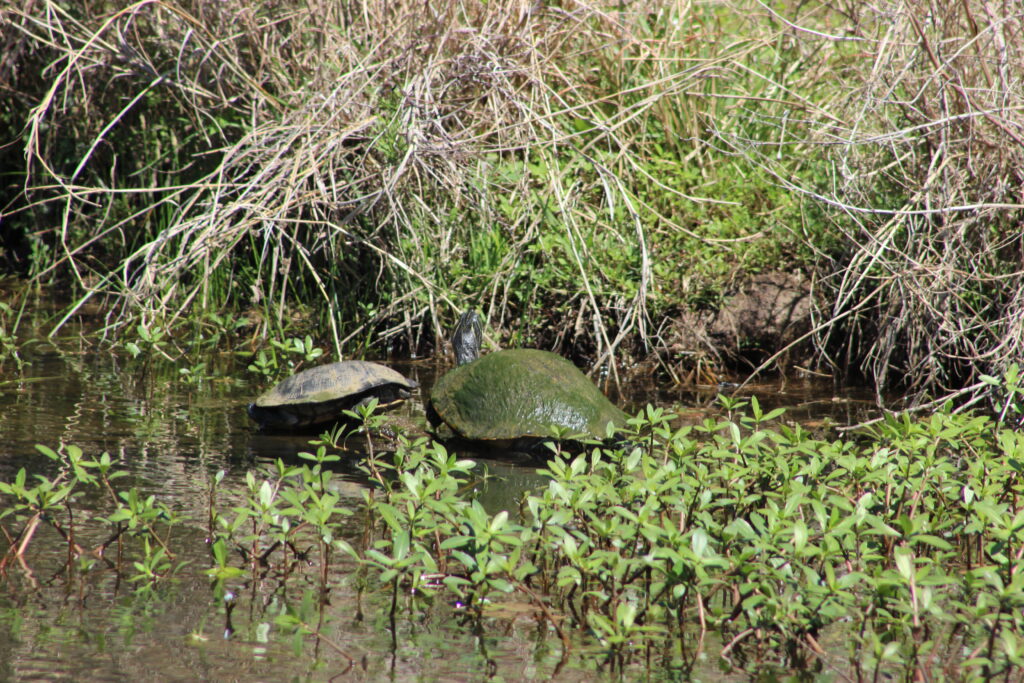
But I was headed for the fishing pond. The alligator weed is taking over some of the pond margins, but turtles still find places to bask in the sunshine. As I prepared to photograph an old red-eared slider, a big female river cooter pulled out of the water beside him. Not only do they warm up this way, these turtles’ healthy bones depend on basking in sunshine and in particular the ultraviolet-B part of the spectrum. And so, whenever they can, they pull out on something to sunbathe and if we approach them, they drop into the safety of the water.
There were lots of damselflies, and all of them seemed to be bluets. The male bluets are just about the best shade of blue, a kind of bright cerulean that might remind you of a clear blue sky. A dozen or more of them were competing for places to perch, fighting the breeze and all oriented in the same direction, darting forward or falling back. I wrote that they were “a little armada of perfect blue flying over the pond vegetation.”
Damselflies are almost always smaller than dragonflies, and a quick rule of thumb is that damsels rest with wings folded over them, while most dragons rest with wings held out horizontally like an airplane.
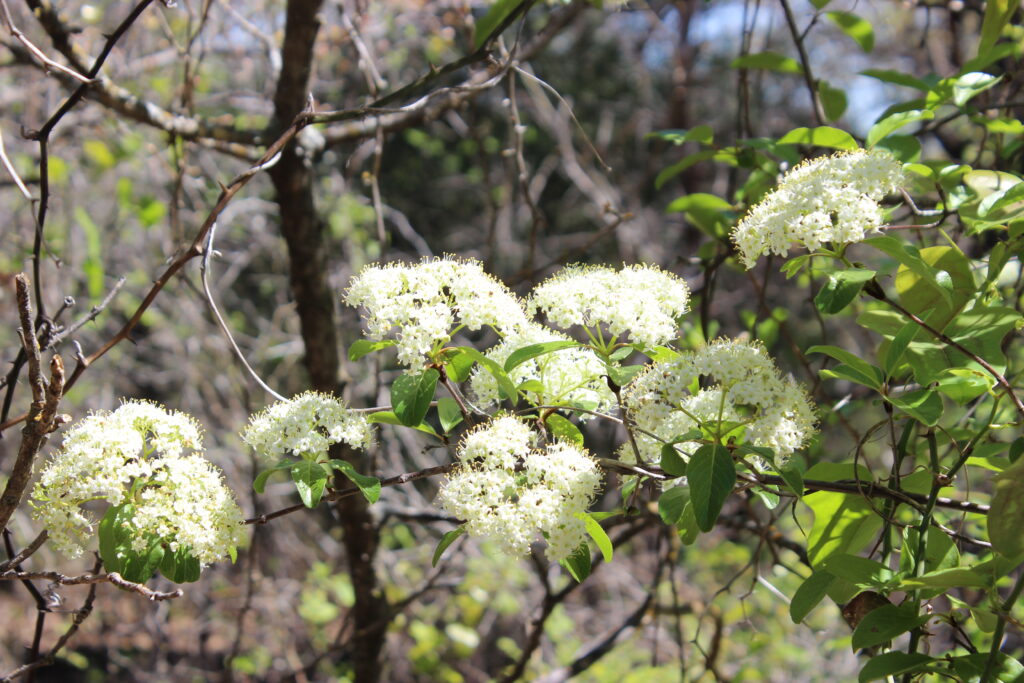
I walked up to the top of the hill, where rusty blackhaw viburnum is producing big clusters of white flowers. Later in the season the tree will produce clusters of dark blue fruits that hang downward.
When I reached the north pond, I could hear cricket frogs calling periodically in group choruses of “crick-crick-crick…” While many other frog species call in the evening and nighttime, cricket frogs can and will call night and day. They have big voices for such small frogs (generally less than an inch long).
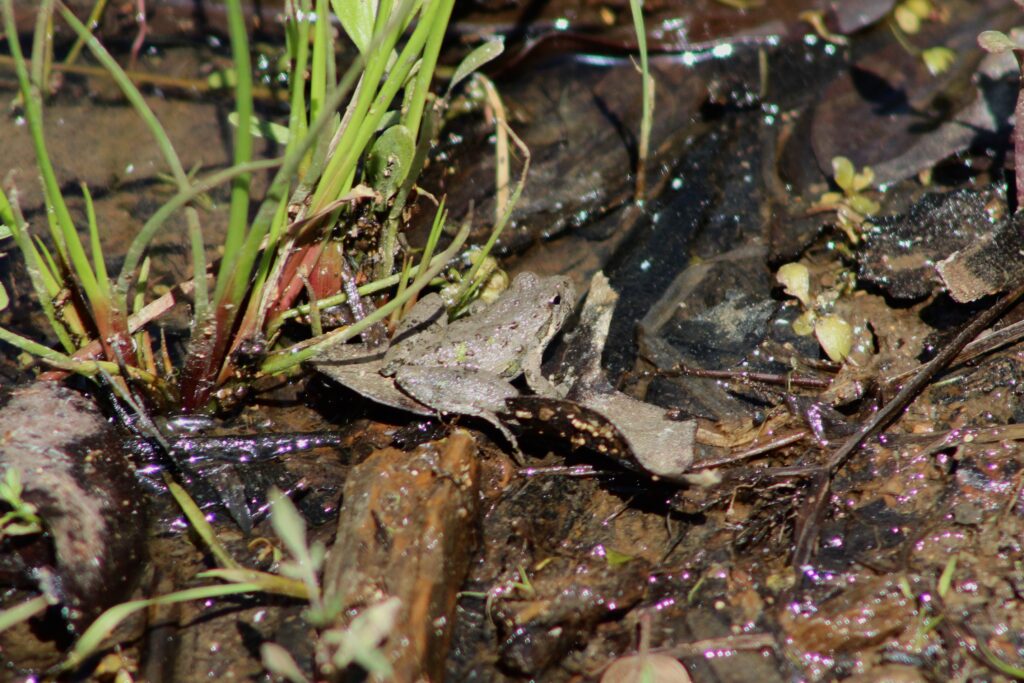
Their natural history involves lots of breeding because they live only a short time – their life span can be around a year – and they are on the menu for many different animals. Birds, snakes, even bigger frogs may eat cricket frogs, and so they are an important part of the food web.
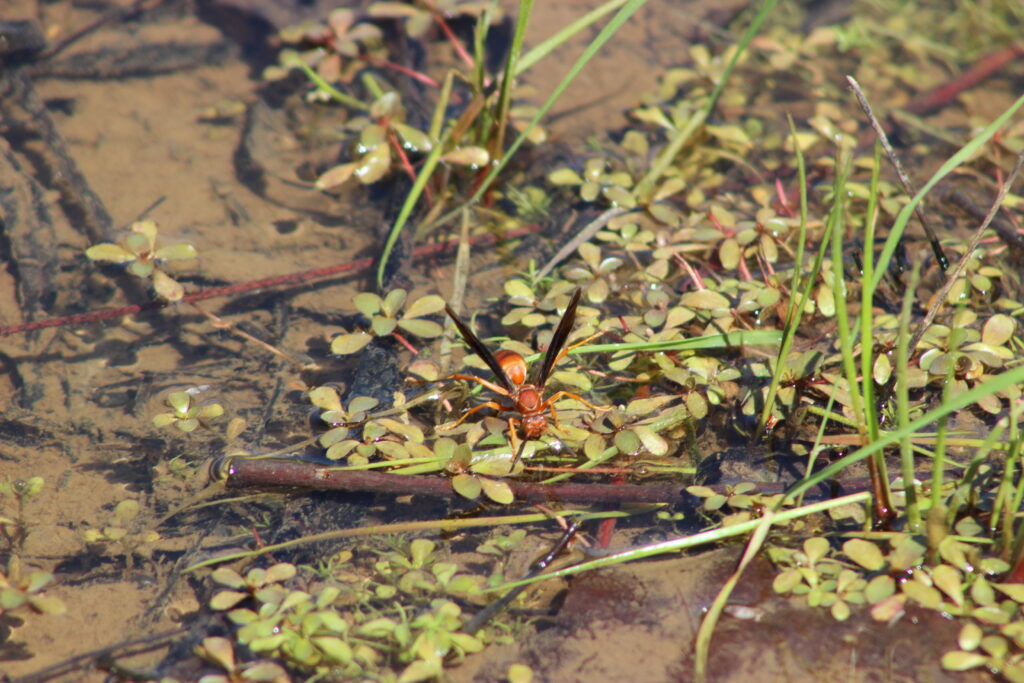
The cricket frogs share the water’s edge with a variety of bees and wasps that come for water. It’s easy to coexist with them, as long as we don’t try to swat them or otherwise attack them. If you step near one, it flies to some new, safer spot. Paper wasps get very defensive if we intrude on their nest, but otherwise I haven’t found them to be aggressive.
But that’s a lesson I have to keep re-teaching to my granddaughter. Maybe we’re wired to freak out when some buzzing thing flies around us, or maybe it’s just that stories, TV, and other kids are full of warnings that the wasps and bees will sting you. And sometimes they will, if we stumble into them or swat at them.