
The start of this winter was warm and dry. The days around Christmas reached a little over 80°F, and on New Year’s Day the preserve was 72°F early in the afternoon. But then forecasters predicted a winter storm that had some of us thinking back to the terrible deep freeze of 2021. On January 24 (the morning I had scheduled to lead a walk at the preserve), real winter arrived.
Some people saw freezing rain, some got snow, but mostly we had fine sleet which accumulated on the roads and on the ground. School was cancelled Monday, and then again Tuesday when the cold persisted and the ice did not melt. It melted enough, though, that I drove to the preserve and walked up to the bluff through a woodland transformed by the snow and ice.
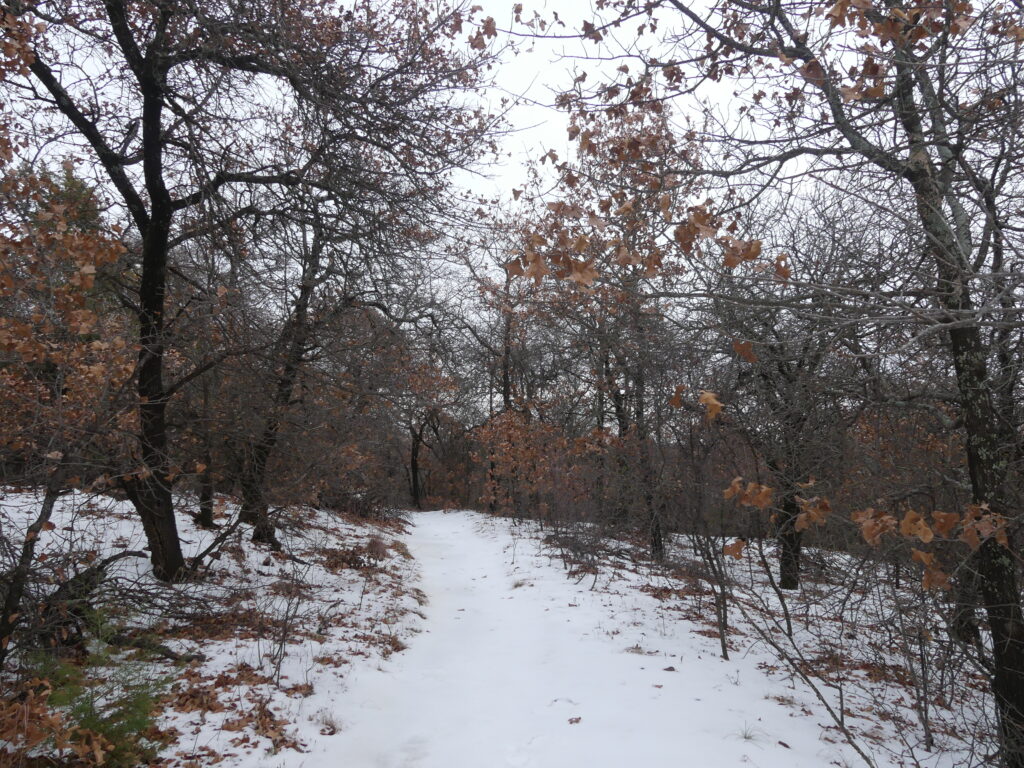
I wrote elsewhere that “When the ground is covered with snow (or in this case, fine sleet), the woods are opened up and the contours of the landscape made obvious. Against the white background, the trunks and branches of oaks form a sort of stark, jagged, and detailed calligraphy, the script of the woodland revealed.”
“You can walk that place year after year, in spring’s profusion of leaves and flowers, summer’s shimmering heat and drying grasses, autumn’s lovely colors, and the bright afternoons and cold clouds of winter, and it will never look like the place I walked today. What was dark is bright; what was partly concealed is framed in bright crystalline water and sunlight.”
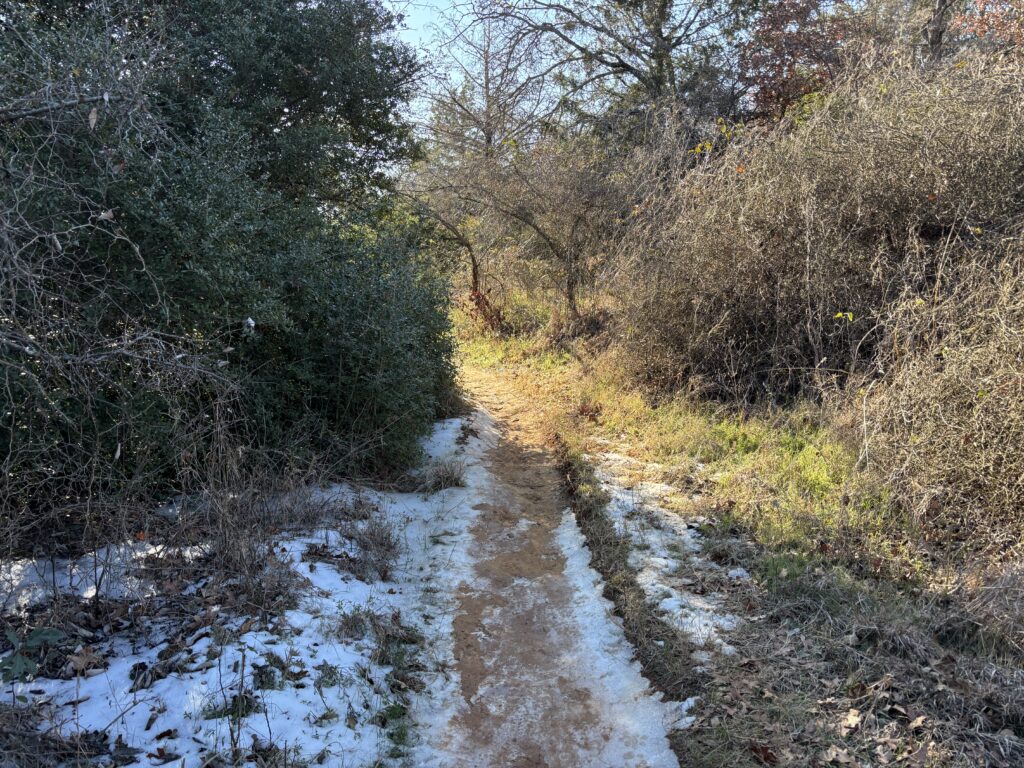
Each additional day brought more thaw, and yesterday I walked in bright sunshine on a cool day on which some ice still persisted in protected, shady places. Mostly the wonderland of light and dark had returned to the “normal” wonder of a bright winter afternoon.
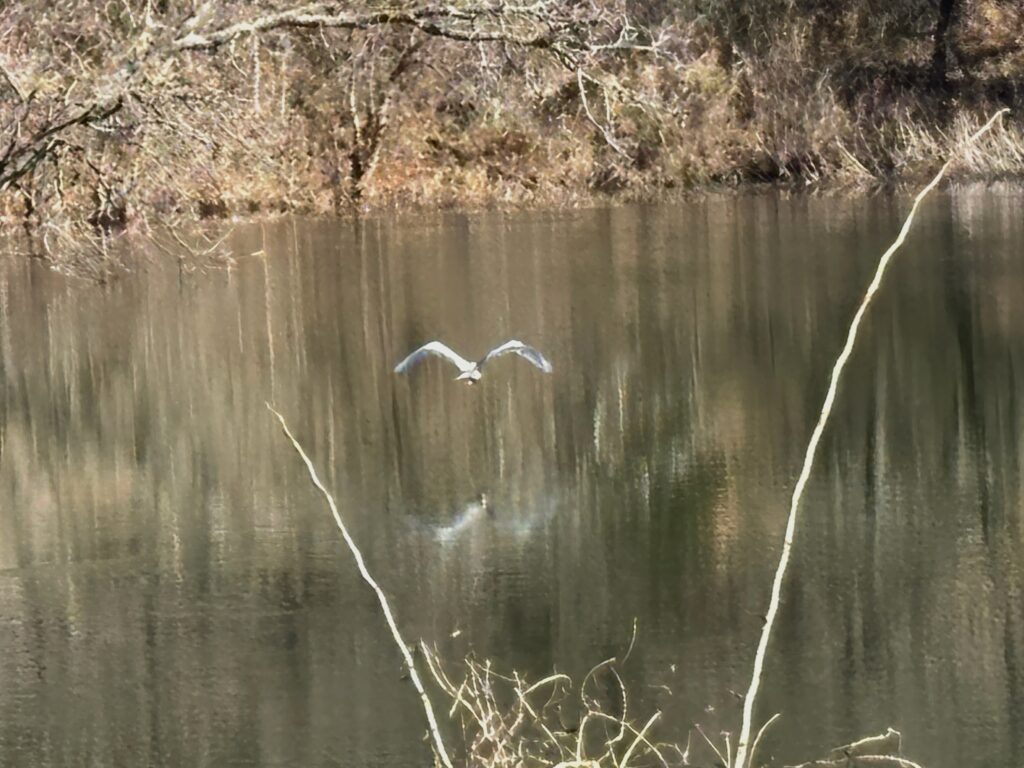
I sat on the Bob Brennan bench and watched a great blue heron soar down over the trees to the pond with that incomprehensible blend of massiveness and grace, seeming to barely clear the trees on its way to a perfect landing. A trio of ducks came over the trees toward the pond, changed their minds and pivoted in perfect unison, and flew back where they came.
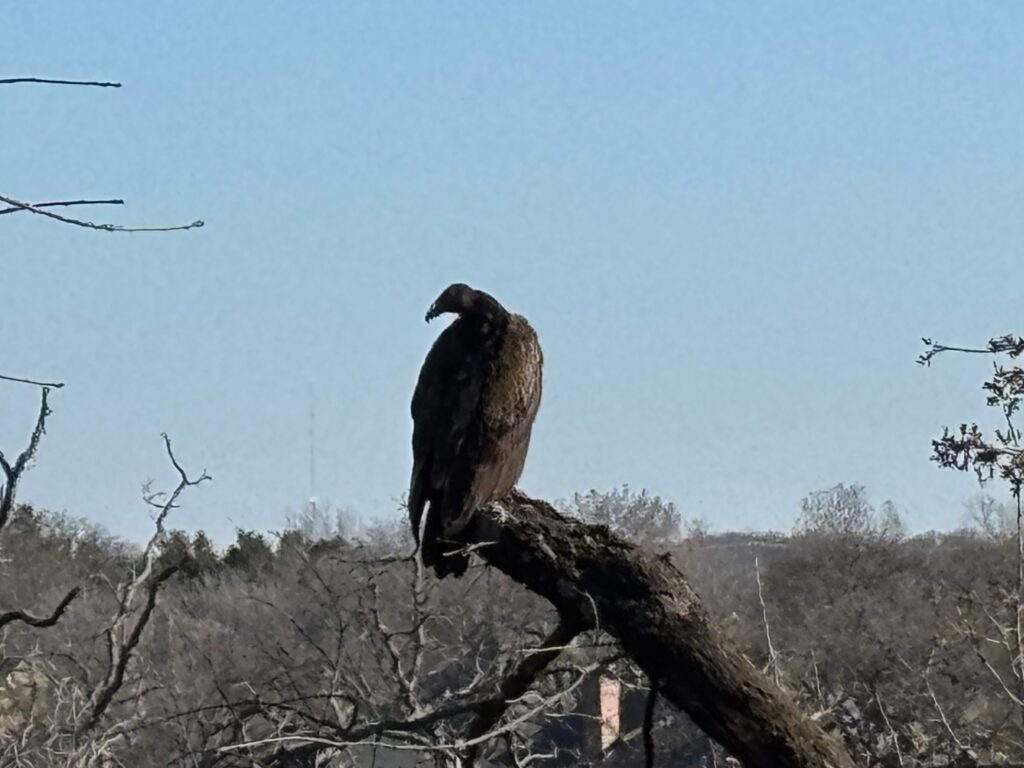
More birds were calling throughout the woods, and up near the boulder trail a couple of vultures sat for a while, preening and looking around. A kinglet flitted among branches, and chickadees chattered and gossiped. Meanwhile I had traveled light and only had an iPhone to capture some of this, so the bird photos are pretty weak. But it’s okay, being present among those birds while watching and listening was great.
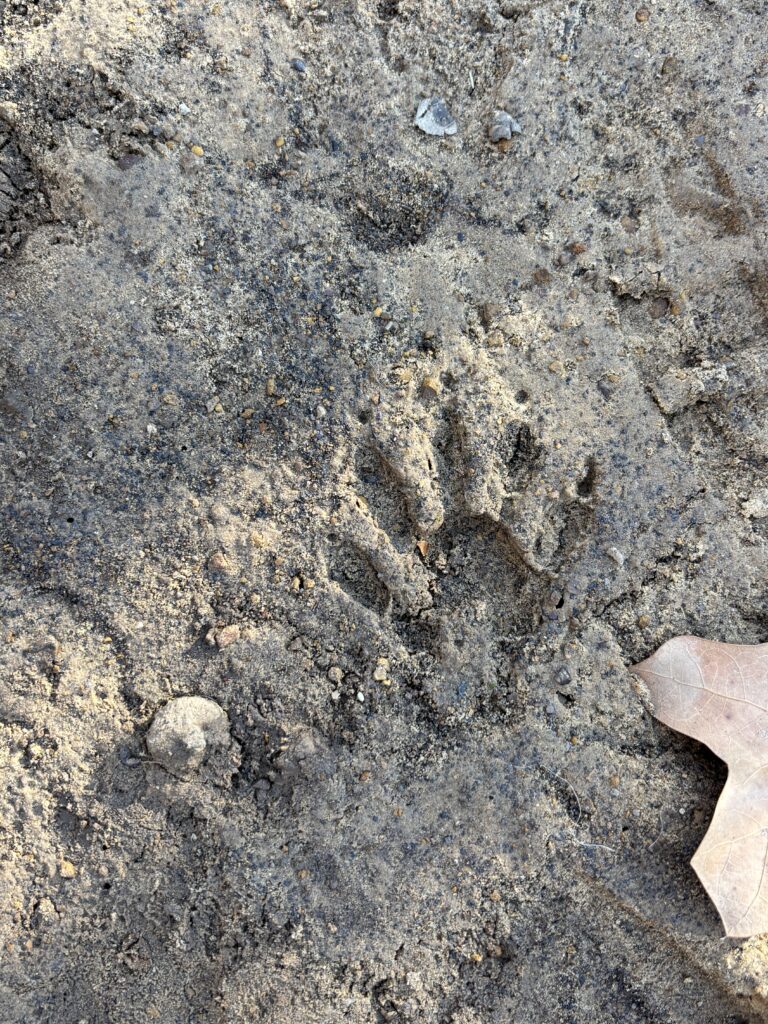
In one place along the trail I saw evidence of the night crew, a footprint in the mud. My granddaughter, some months ago, was not too keen on walking among the raccoons, but I convinced her that they were sleeping. This one was probably sleeping, too.
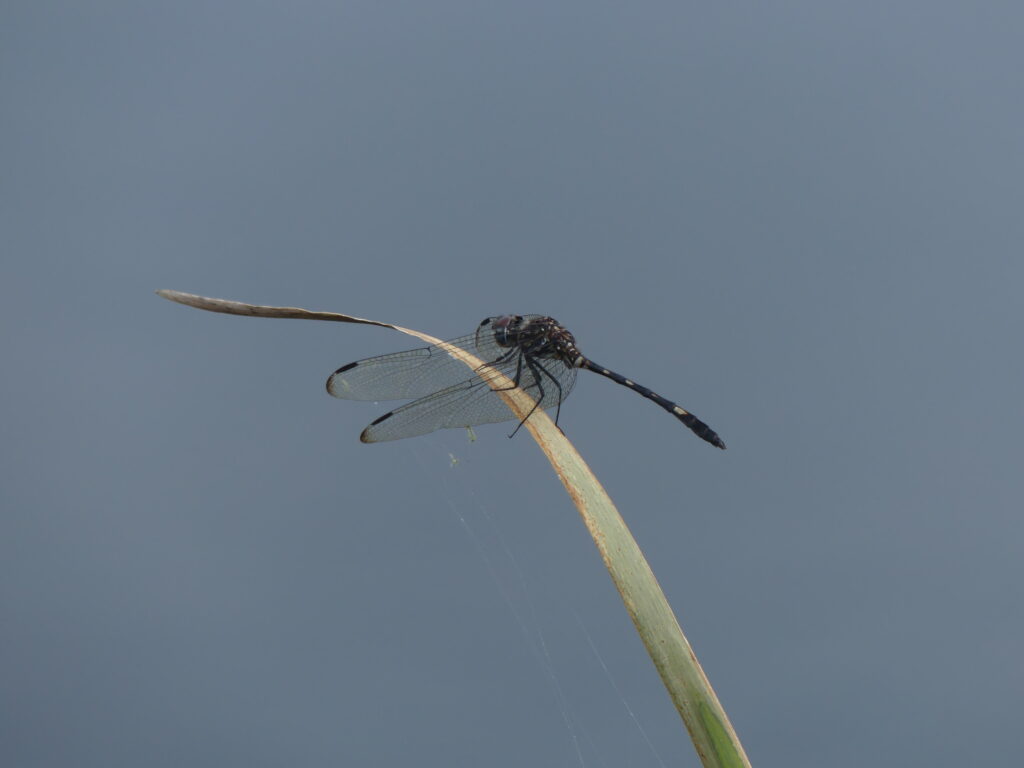
Where were the insects – sleeping along with the raccoons? Ordinarily the preserve has some resident butterflies and dragonflies that we can find even on winter days. The little yellow (sulphur) butterflies dance along the trail in their bouncy, low-flying ways even in January. On sunny winter days, a few skimmer dragonflies show up around the pond. Not yesterday, even with full, warm sunshine and temperature in the 50s.
Entomologists talk about diapause as a strategy for insects to get through winter, when short days and lower temperature trigger an interruption in development and activity. I wonder, though, if these normally active insects are simply sheltering in a tree cavity or some other spot where it will not freeze, getting through the coldest days and then re-emerging. Diapause is described in several sources as something triggered even before the coldest weather, a hormone-controlled thing that presumably would have grounded the butterflies even before the big freeze, and kept them inactive until we saw signs of spring.
There are better-informed naturalists who could probably put the matter to rest (if not diapause) right now. And learning something new is always a great thing – but you know what I want to do? I want to treat it as a sort of natural history experiment, and keep visiting the preserve regularly to see when the insects reappear. I’m hoping for a dragonfly or two this week.
… and today it’s 81 degrees in the area and I’ve seen a couple of butterflies. The bee tree is busy, too.